Session Data
- Date: 11/09/2026
- Time: 19:00 – 22:13 UT
- Seeing: III. OK – Moderate
- Transparency: III. Clear with slight haze
- Temp: 13 C,
- Air Pressure: 1027mb
- Humidity: 87%
- Dew Point: 11 C
- Wind Speed: 2 mph
- Average SQM: 20.42magn/arcsec^2
Scope: TMB 80 f/6 Camera: Player One Ares M Pro. Dark subtracted
All images are displayed North to the top and East to the left.
Tonight was more of a test of my new mount, the WD-17 strain wave from Warpastron. I may do more of an in depth write up at some point once I become more familiar with it.
Click the images to display at full size.
NGC6341
Located +04°54’15.8″ PA:236° from Iot Her in Hercules
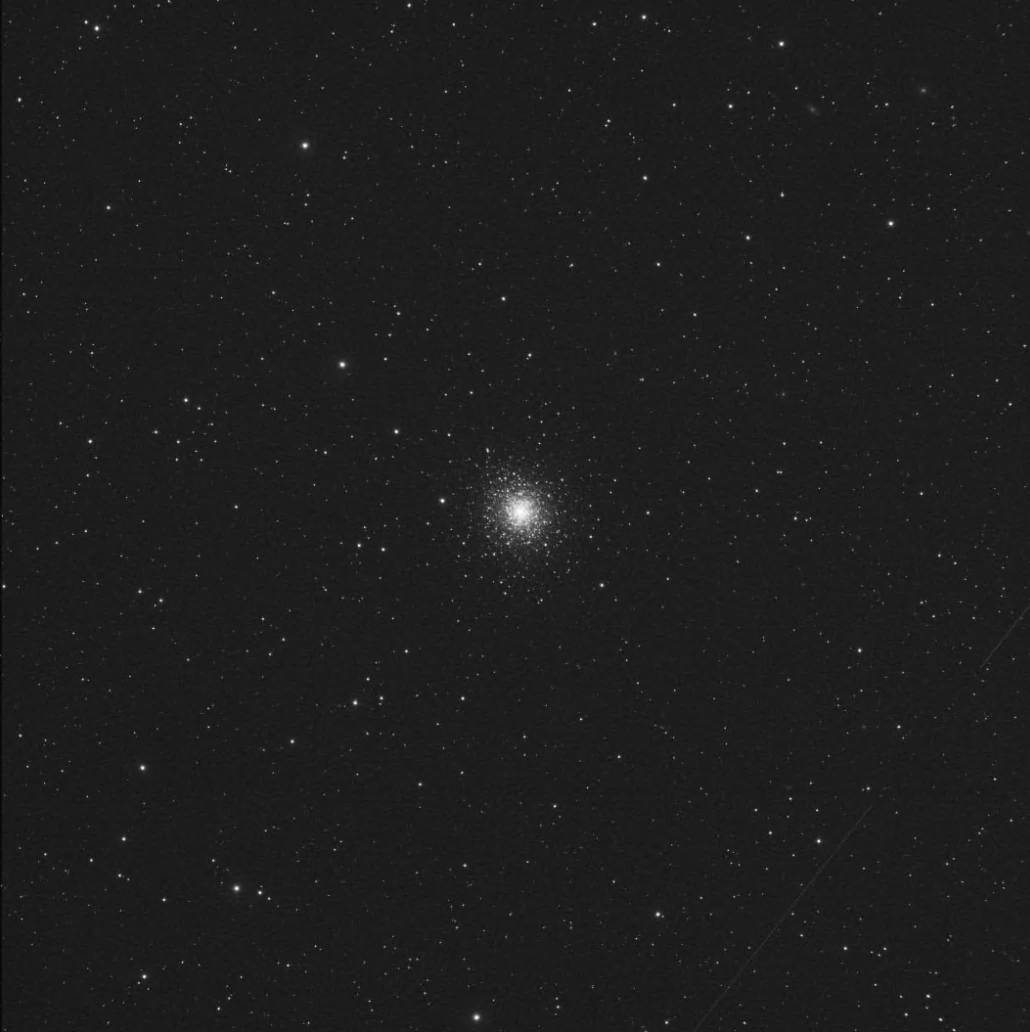
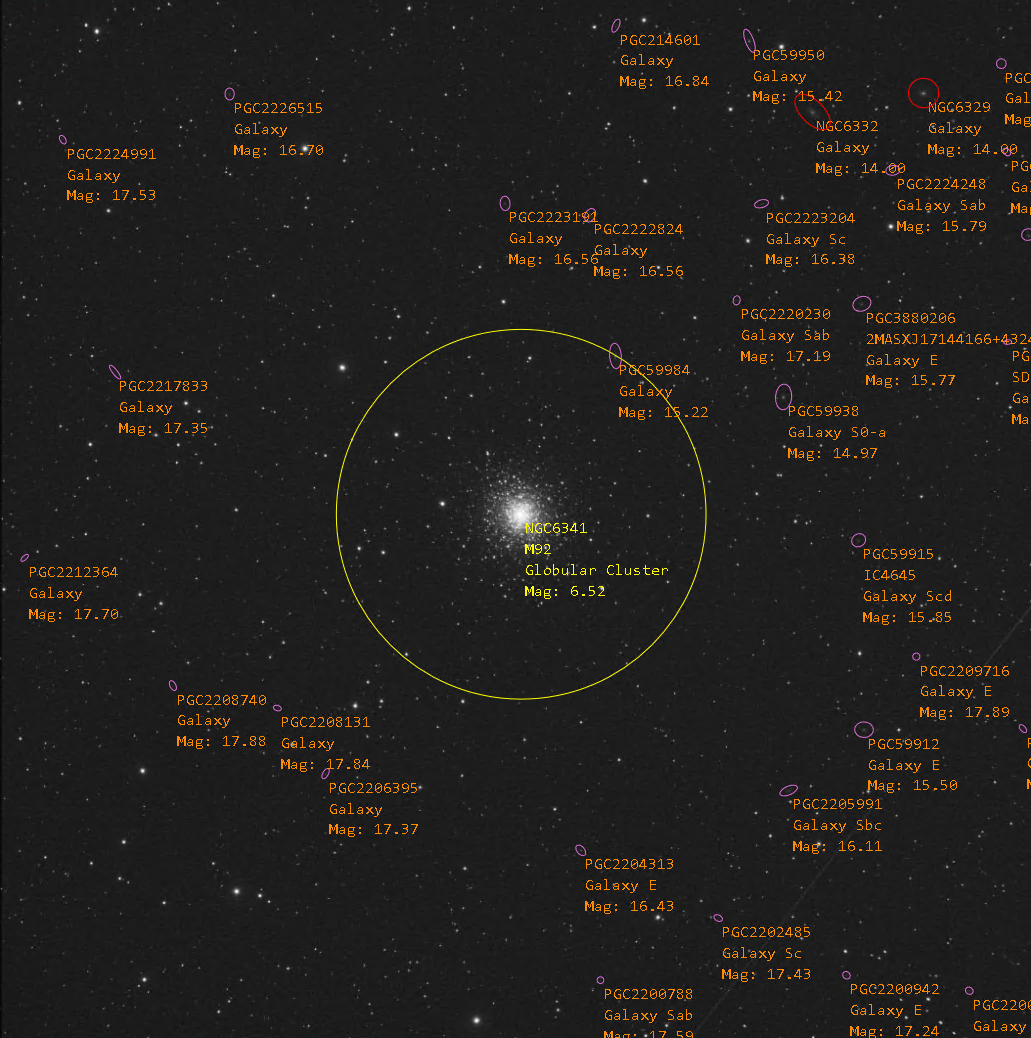
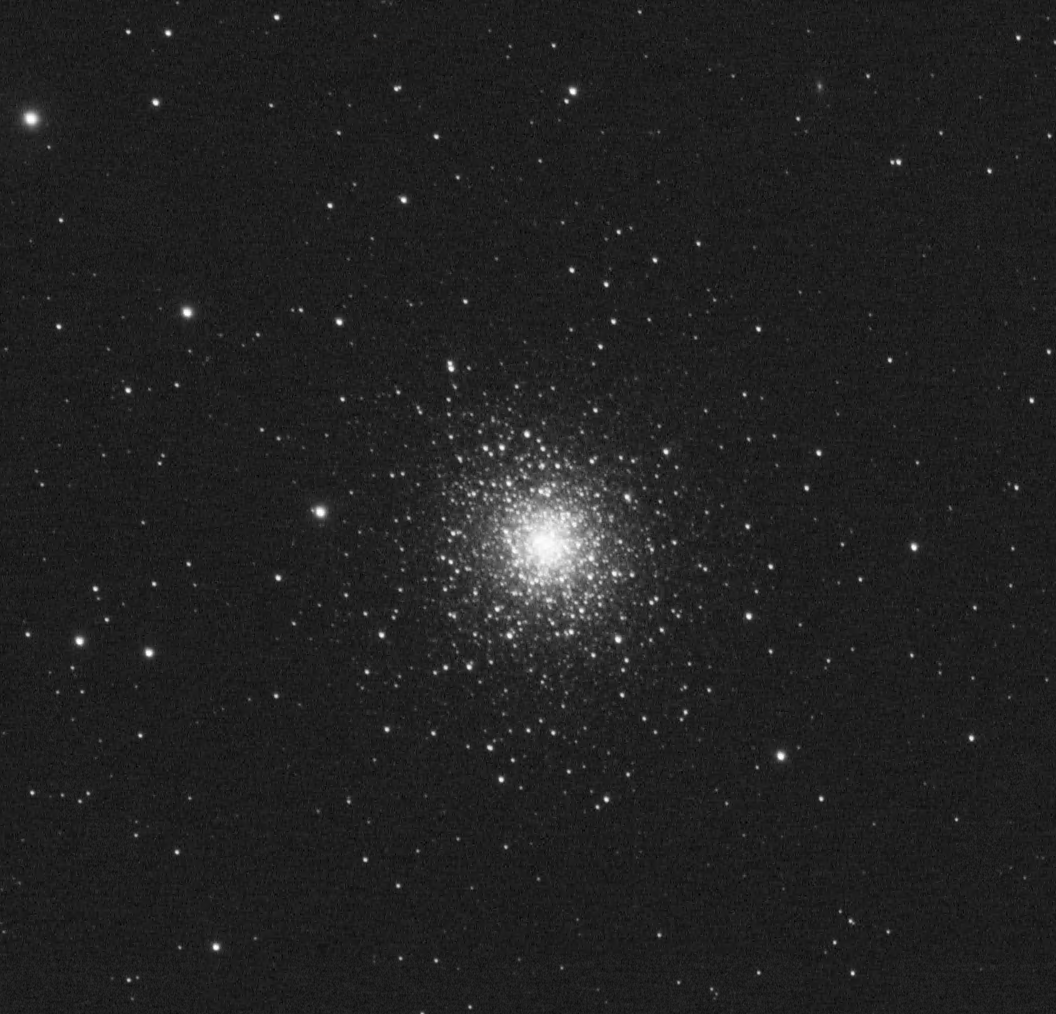
The cataloged diameter is right at about 11 arc min. When viewed at 100% the brighter central core measures about 3.5 arc min. Just outside of this brighter core on the lower edge, is a bracelet of stars circling from East to West. Staring at the cluster for a while, there is a bias of star concentration towards the North Eastern side that forms a very loose triangular shape, like the nib of a fountain pen. To the East there is a conspicuous line of three bright stars heading off to the North East.
Within the cameras FOV there are a multitude of small PGC galaxies. Most are to the West of our target .The closest to the NW is PGC59984 15 mag.
Total Integration Time: 555 sec
NGC6229
Located +04°48’20” PA:73° from Tau Her in Hercules
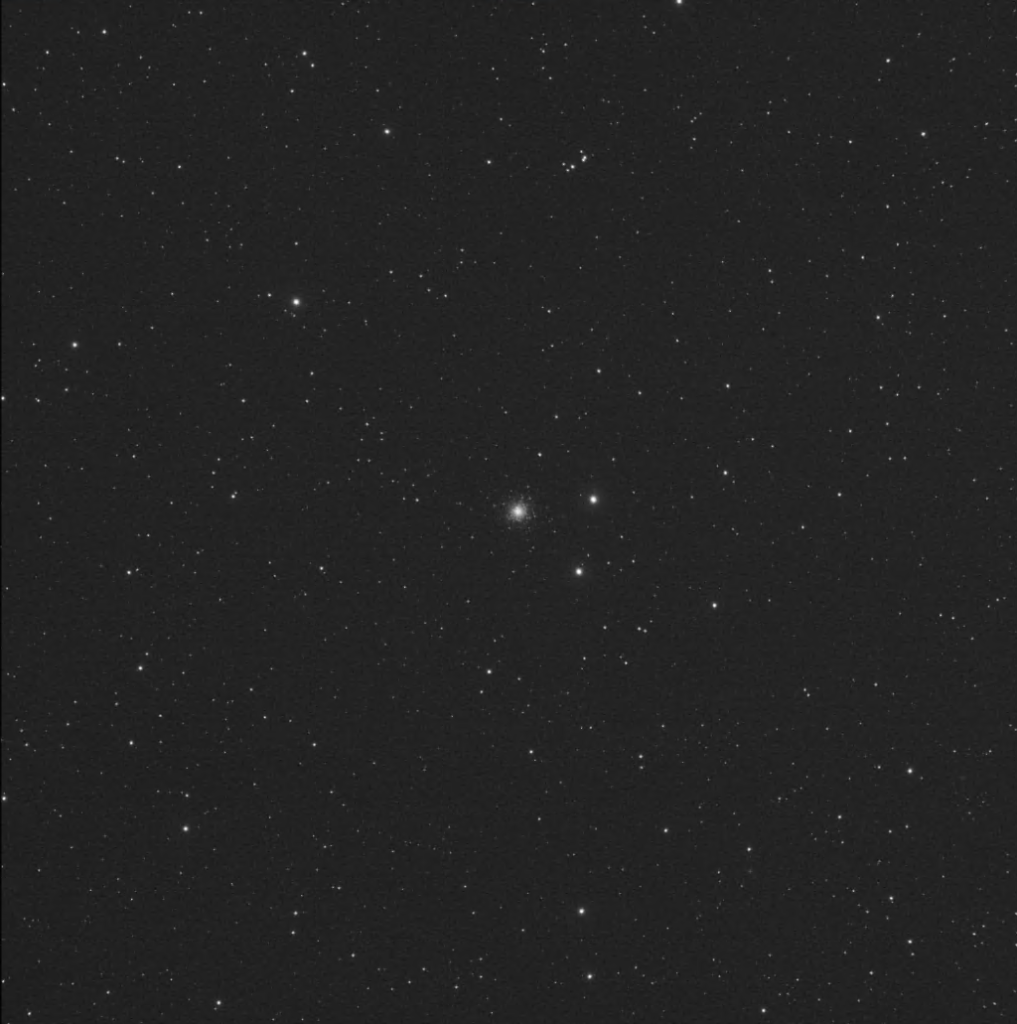
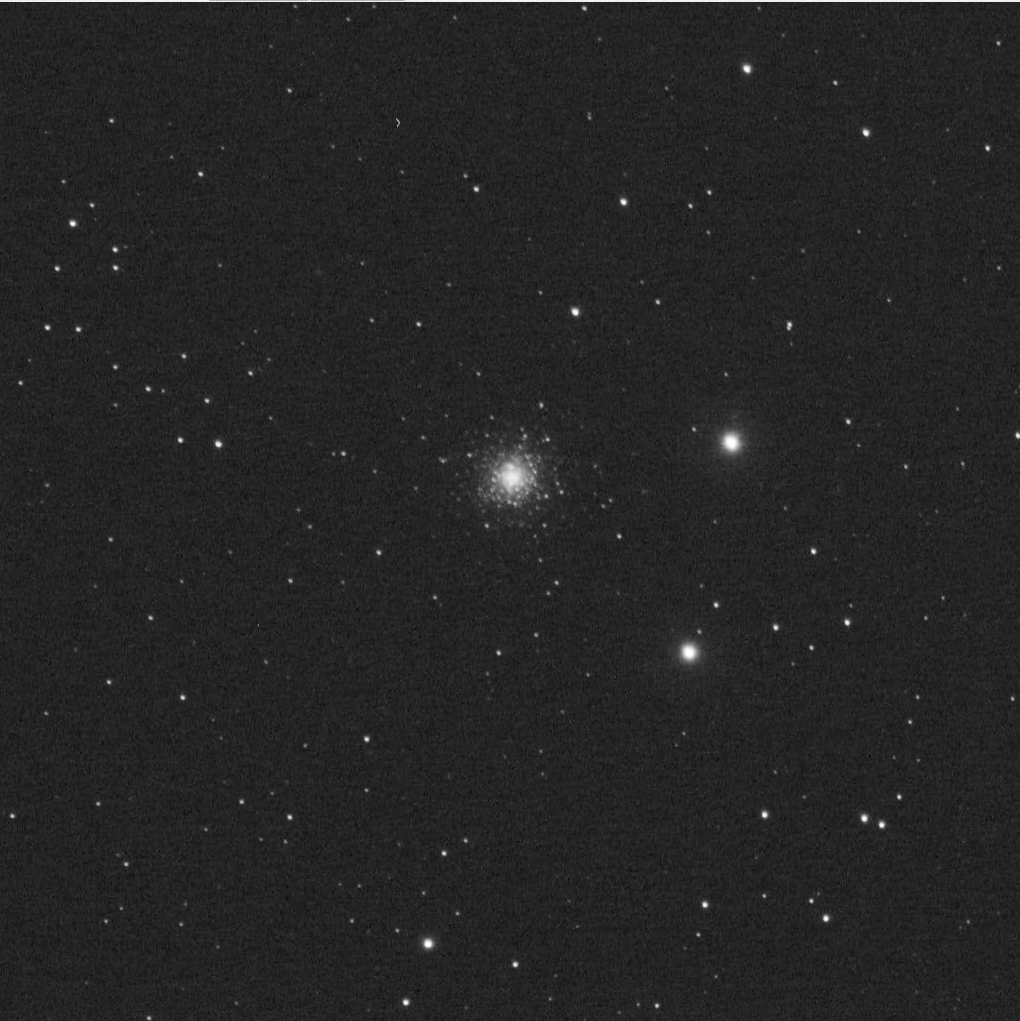
Certainly the wrong scope to observe this target, but it is what it is. At 100% this globular looks like an eye. You have the bright pupil centered on the eye bounded by both eyelids. The upper eyelid being flatter than the lower one.
The stars around the brighter core are not symmetrical and the cluster looks to be more dense towards the South Western quadrant. Off to the West are two bright 7.5 and 8.0 mag stars.
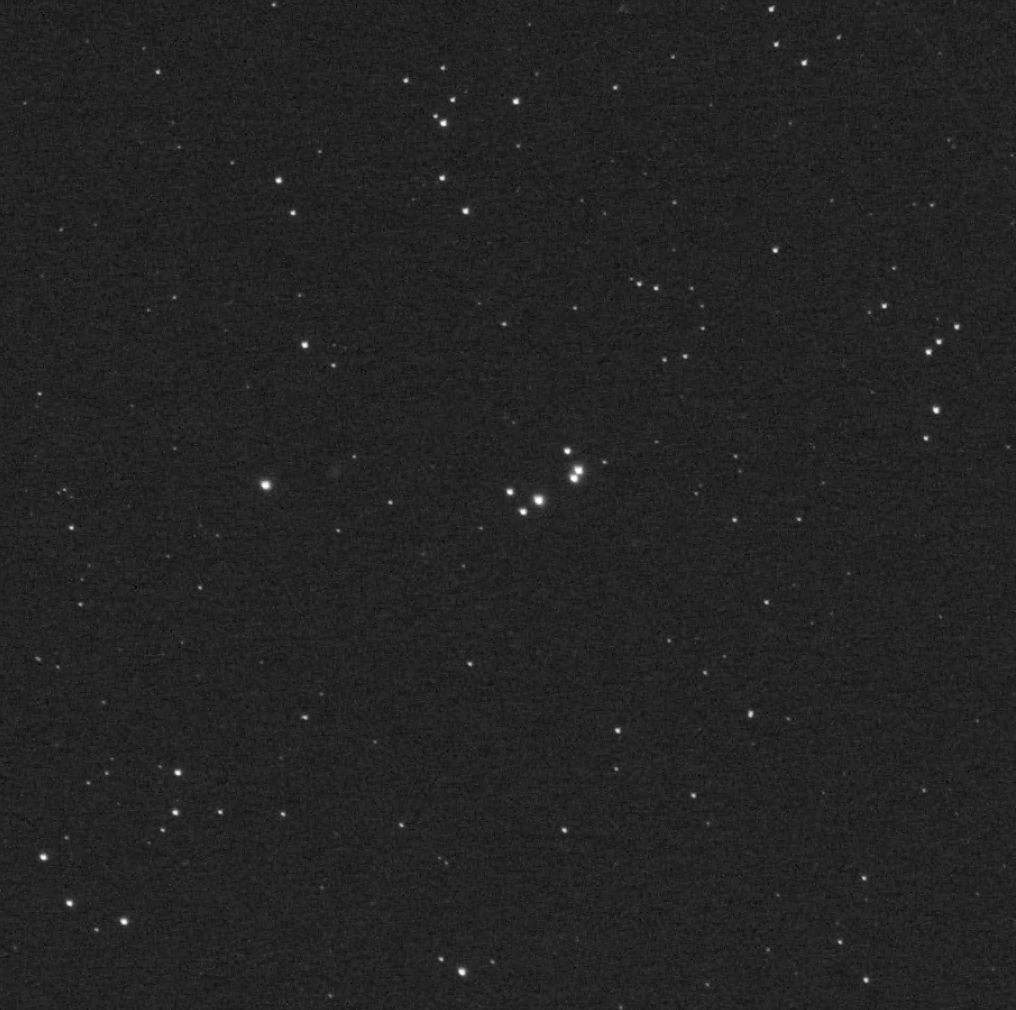
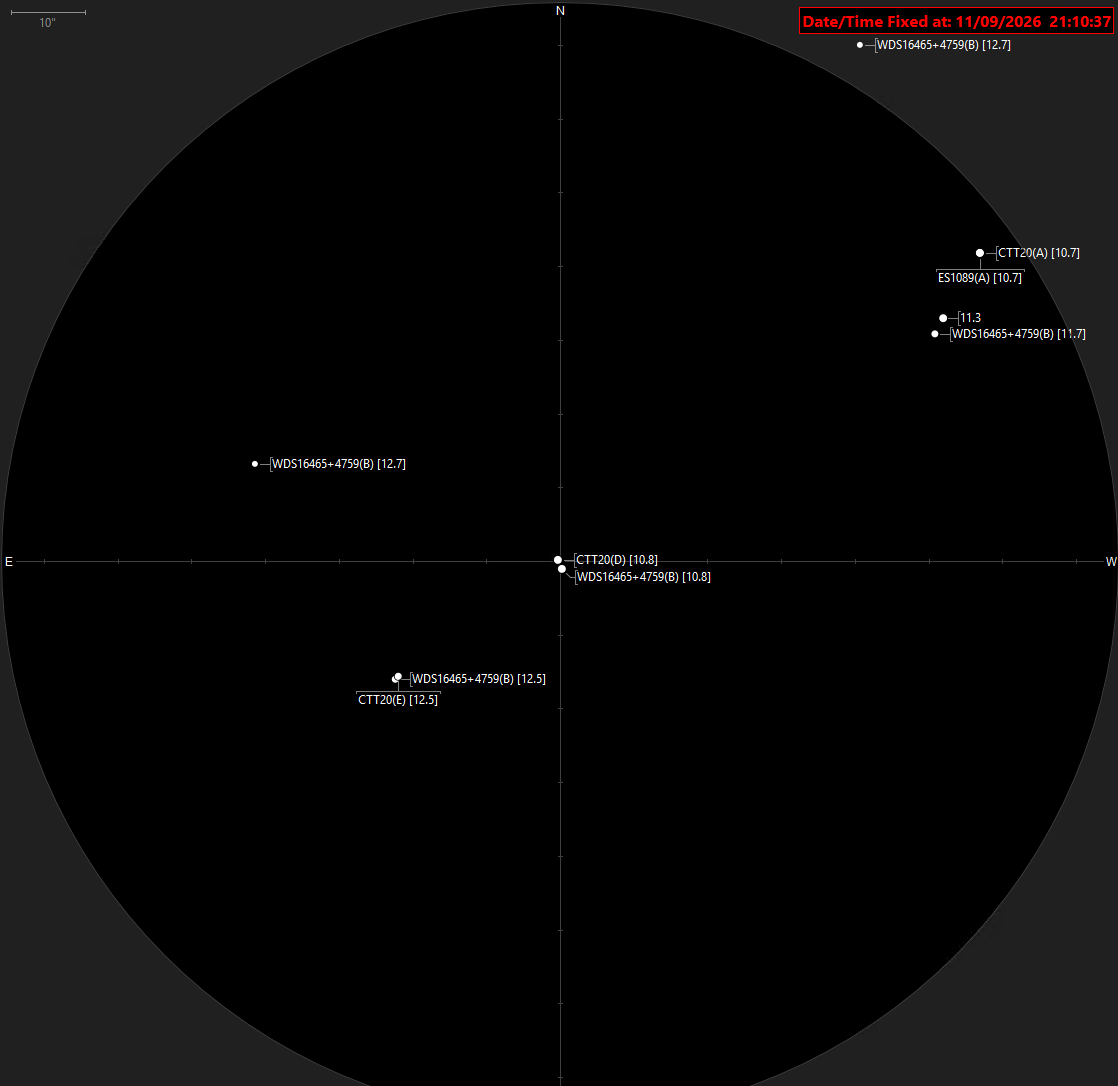
At the Northern edge of the frame there is a cluster of six 11th to 13th mag stars. While we can see 6 stars here, Astroplanner shows three of this group are very close doubles as well. I need to get my head around which are the primary pairs and which are the secondary pairs.
Total Integration Time: 285 sec
Palomar 10
Located 05:16:20 degrees PA277 degrees from Alpha Sge in Saggita
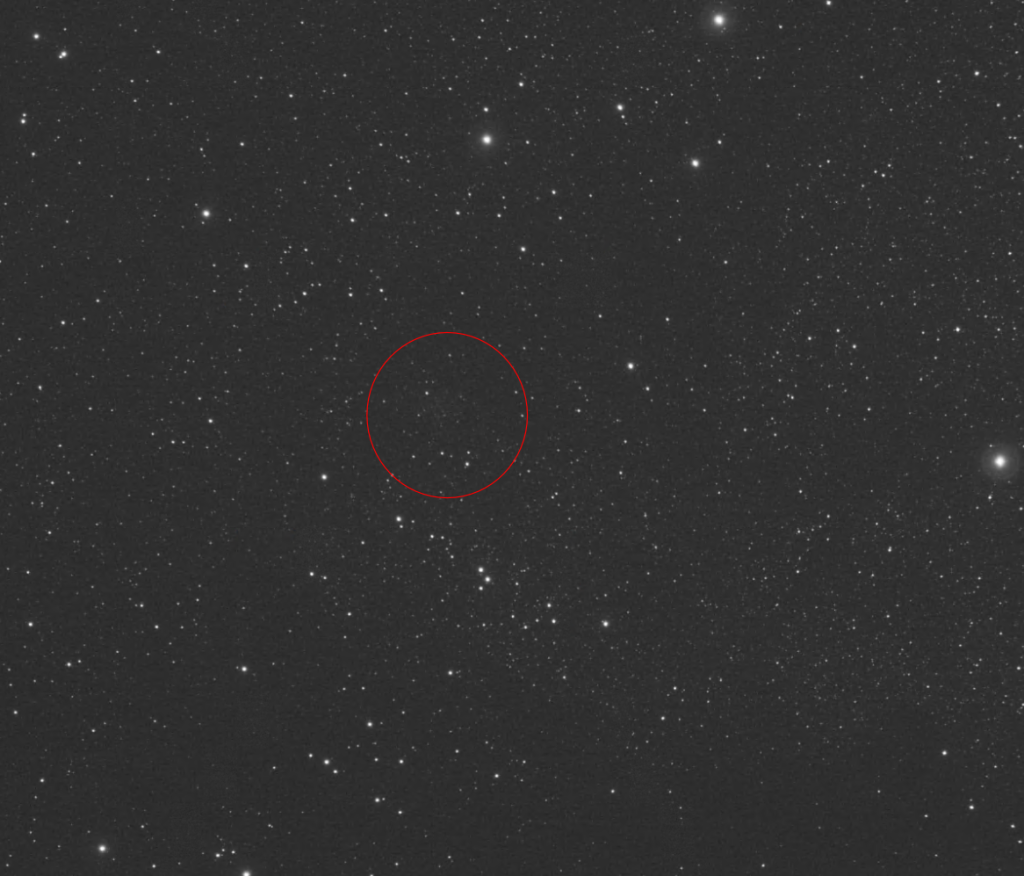
OK. This one is pretty much invisible here with this scope and exposure time combo. I’ve circled the target, but it is barely a smudge.
Just to the South is a pretty chain of a dozen or so of stars running towards PA 243.
Total Integration Time: 510 sec
NGC7006
Located 3:33:47 degrees PA88 degrees from Gamma 1 Del in Delphinius
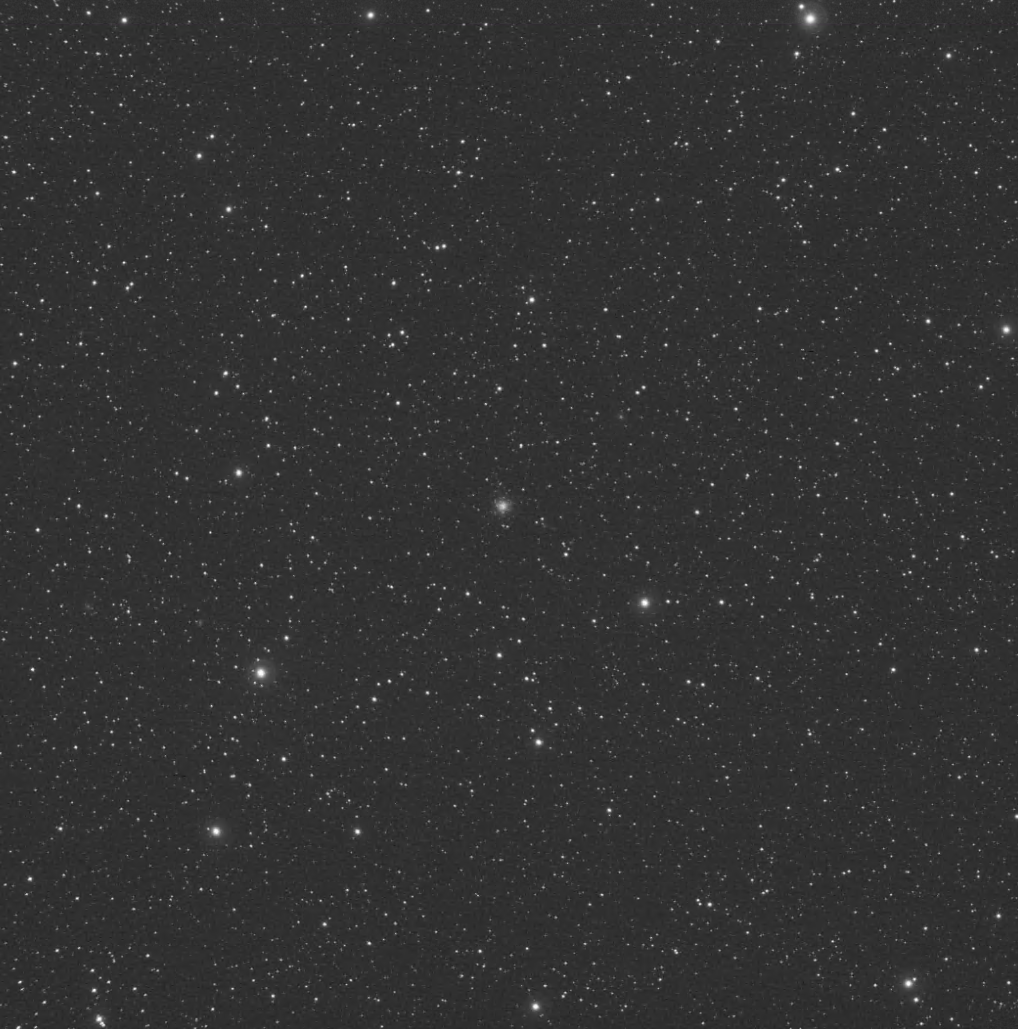
Another small globular. NGC gives a size of 2.8 arc min, but I see less than half that size. The brighter core is quite large and occupies 50% of the overall diameter that I am seeing after 315 seconds of exposure.
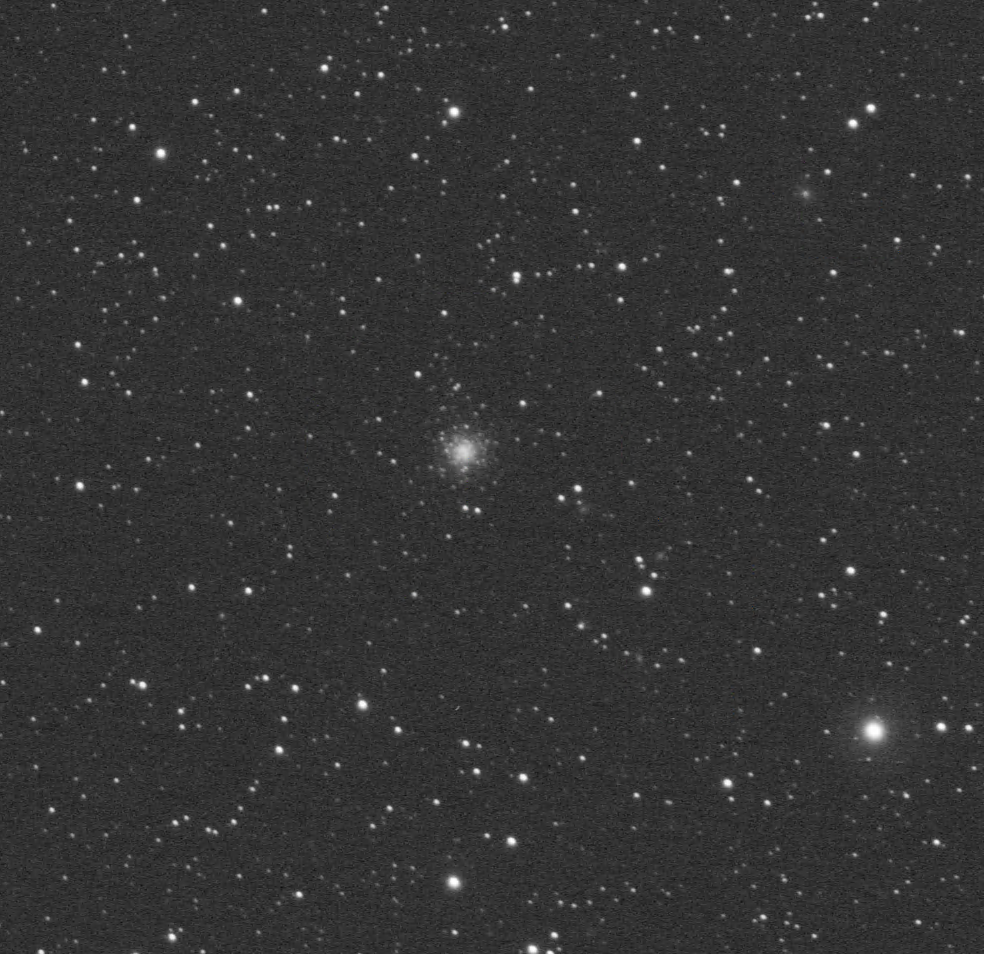
At 100% just of to the SW I can just make out the faint smudges of a few 16th mag PGC galaxies. PGC65907, PGC1501723 and PGC 65908. The FOV at this size you can see a number of a bracelet of star chains going off in all sorts of directions
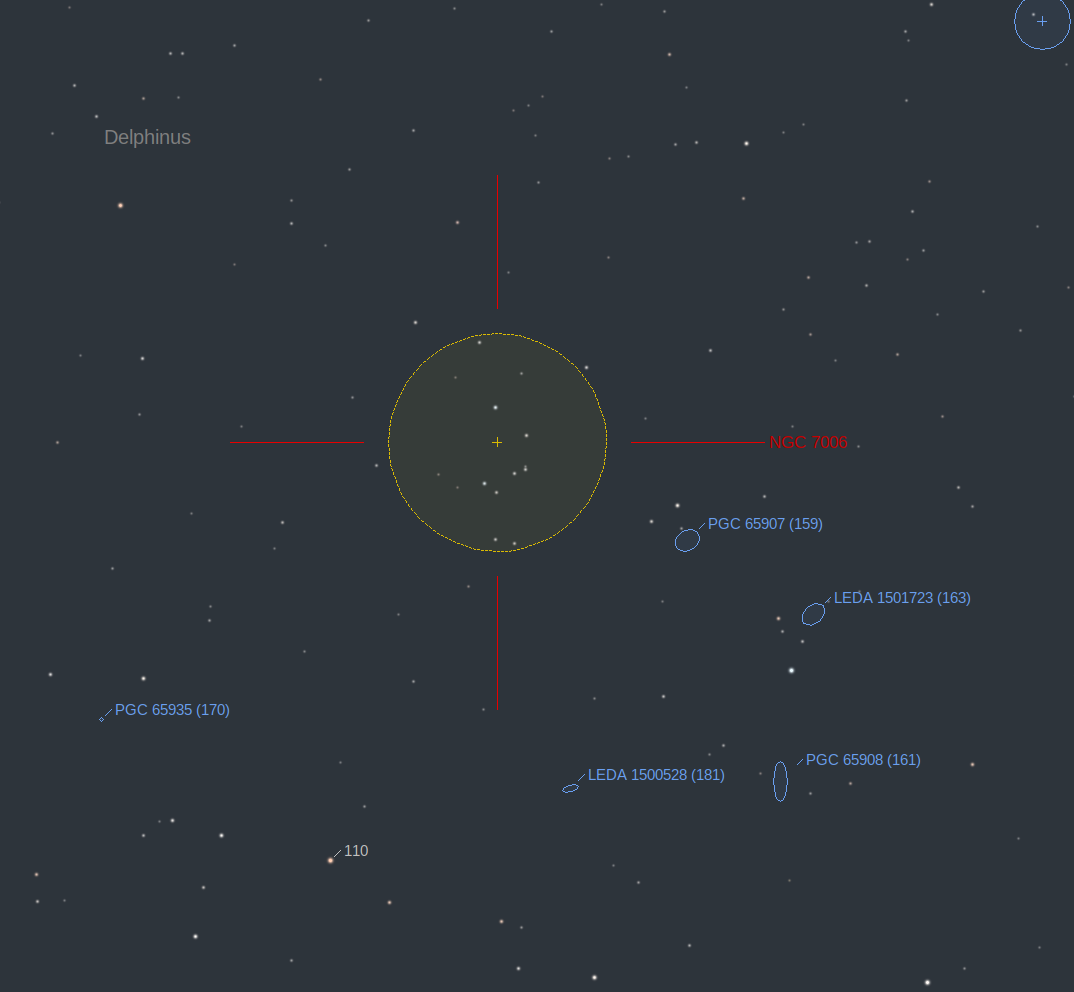
Total Integration Time: 315 sec
NGC6749
Located 05:10:43 degrees PA 256 from Delta Aql in Aquila
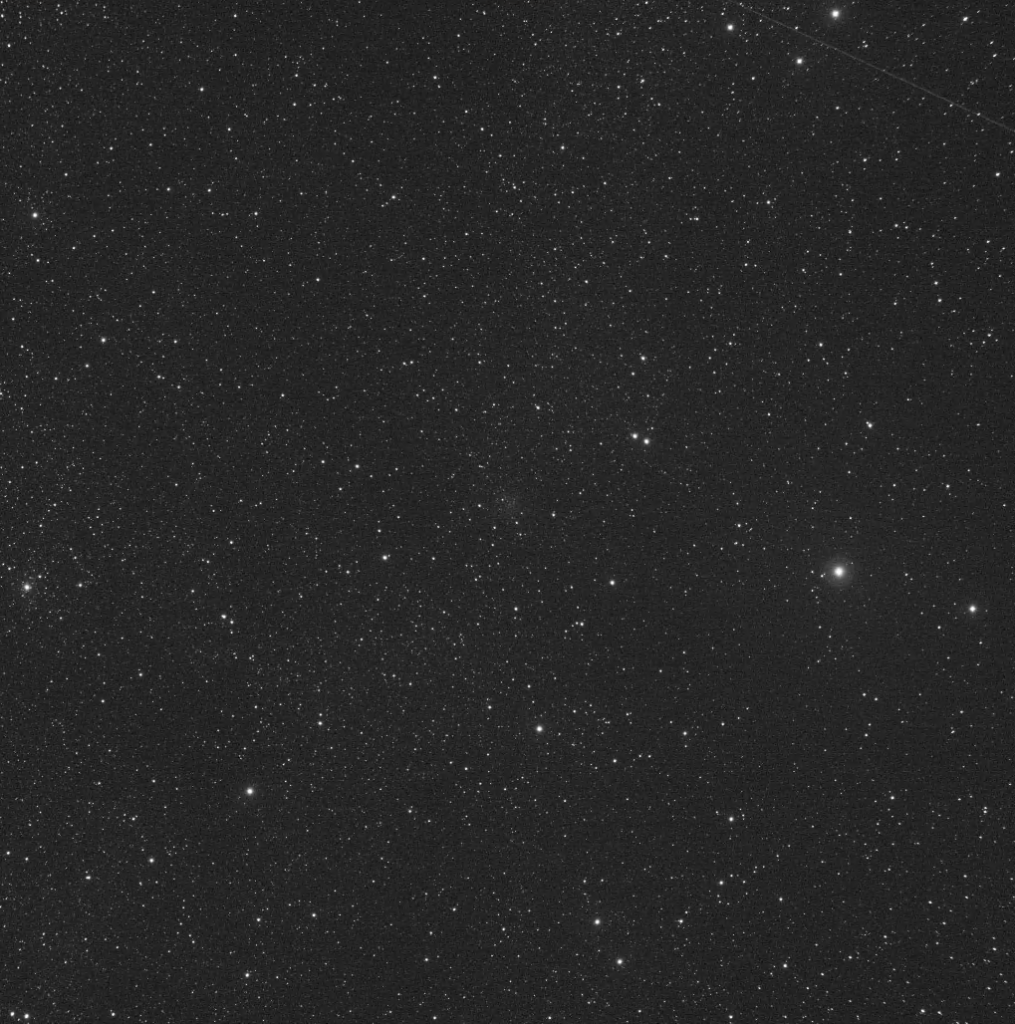
Another very faint globular, but at least it’s just visible at full frame zoom in the above image.
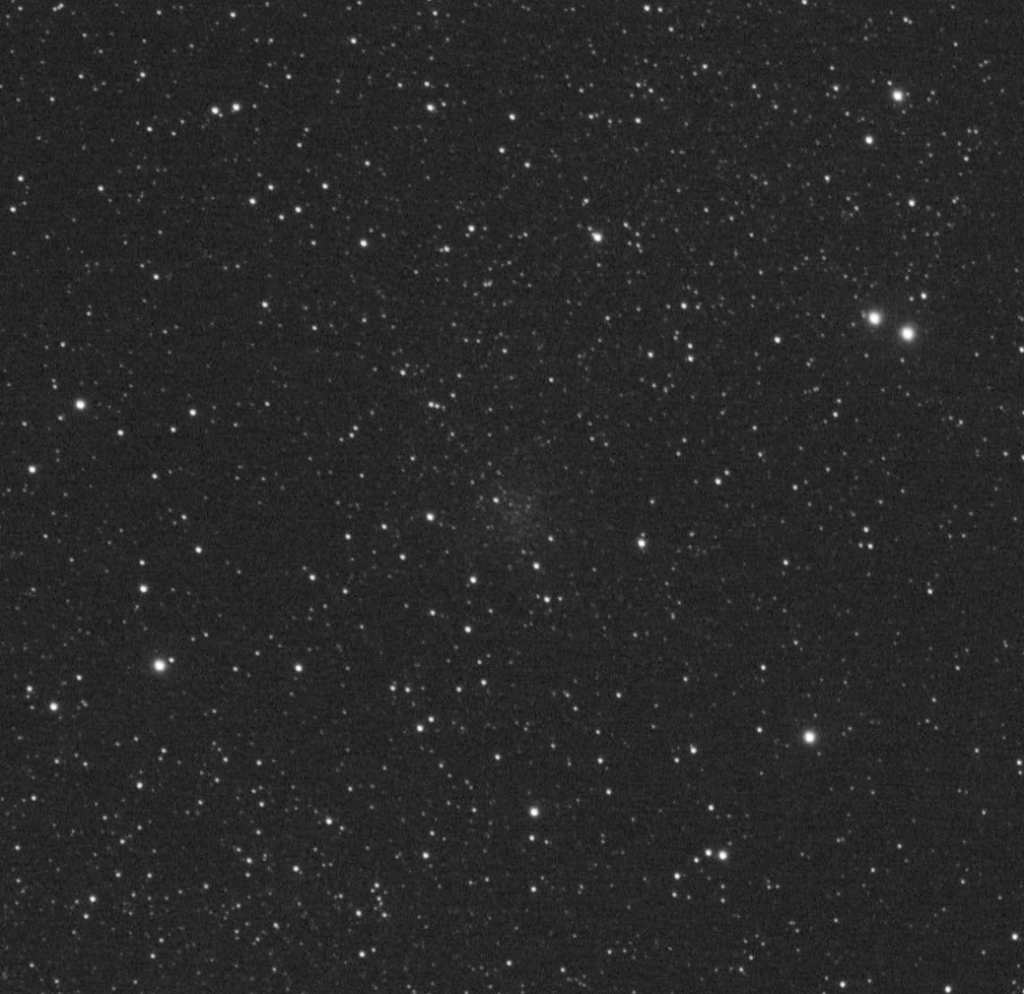
At 100% size I/m not sure you can count more than 2 bright stars and another 4 barely visible ones contained within the stated diameter of 2.2 arc mins. I need to do this one again with a larger scope.
Total Integration Time: 345 sec
NGC6760
Located 04:08:13 degrees PA 229 from Delta Aql in Aquila
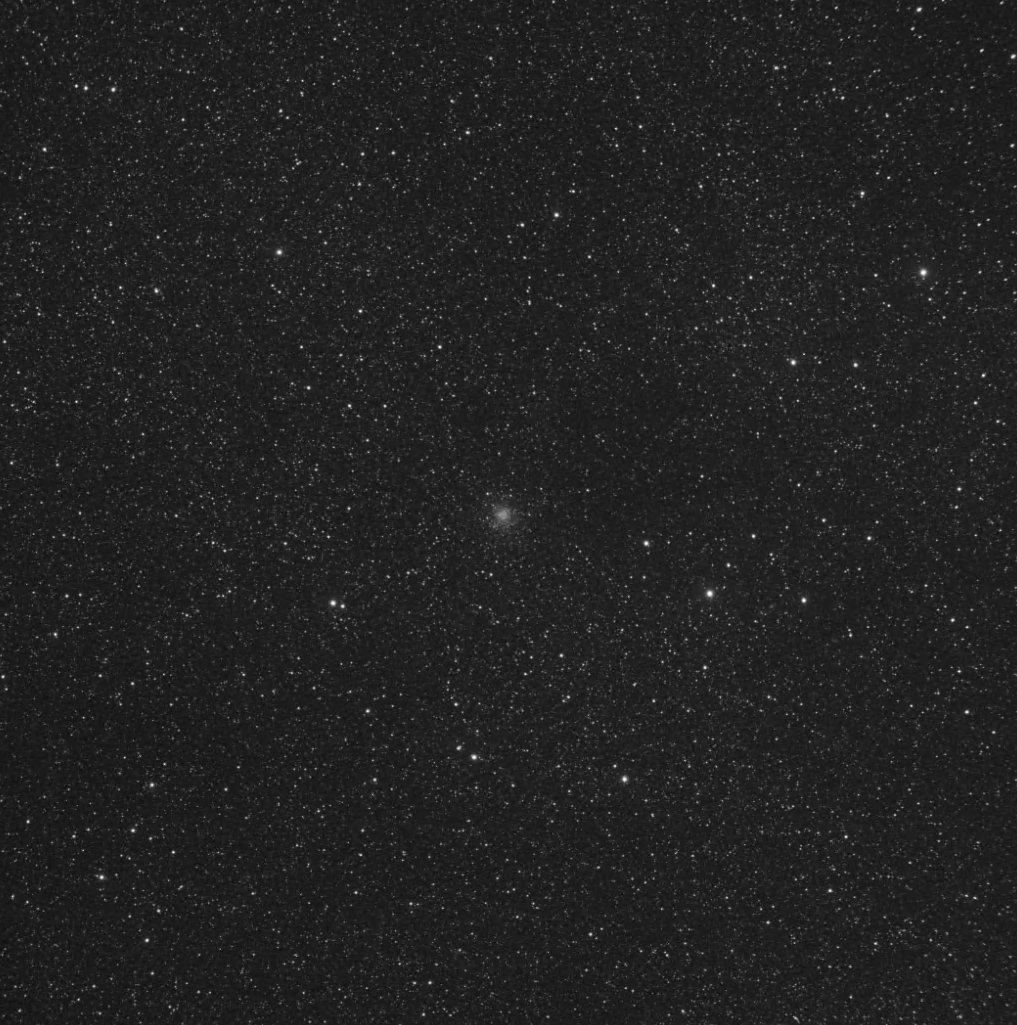
NGC6760 sits in quite a busy starfield. 14 arc mins to the Southeast is an obvious double pair WDS 19121+0055A 8.6 mag and the B component 10.3 mag.
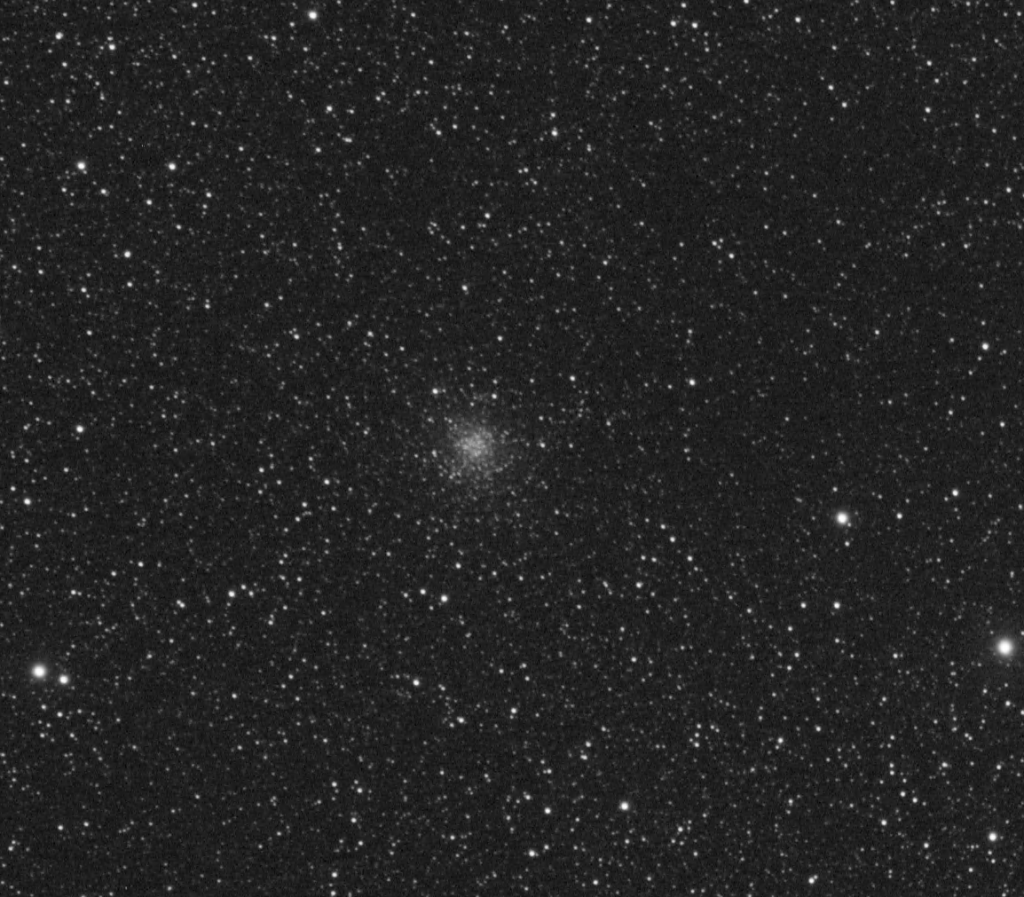
At 100% we get to see a lot more detail. The cluster itself is not circular by any means. The brighter core as a cloud of stars heading off to the North East. Then from the South of the core, there are two tendrils of stars . The easterly one curves South before going East and the Westerly one goes South before going West. This outer halo extends no more than about 2 arc mins in diameter.
Total Integration Time: 435 sec
NGC6205, M13
Located 02:028:24 degrees PA 1186 from Eta Her in Hercules
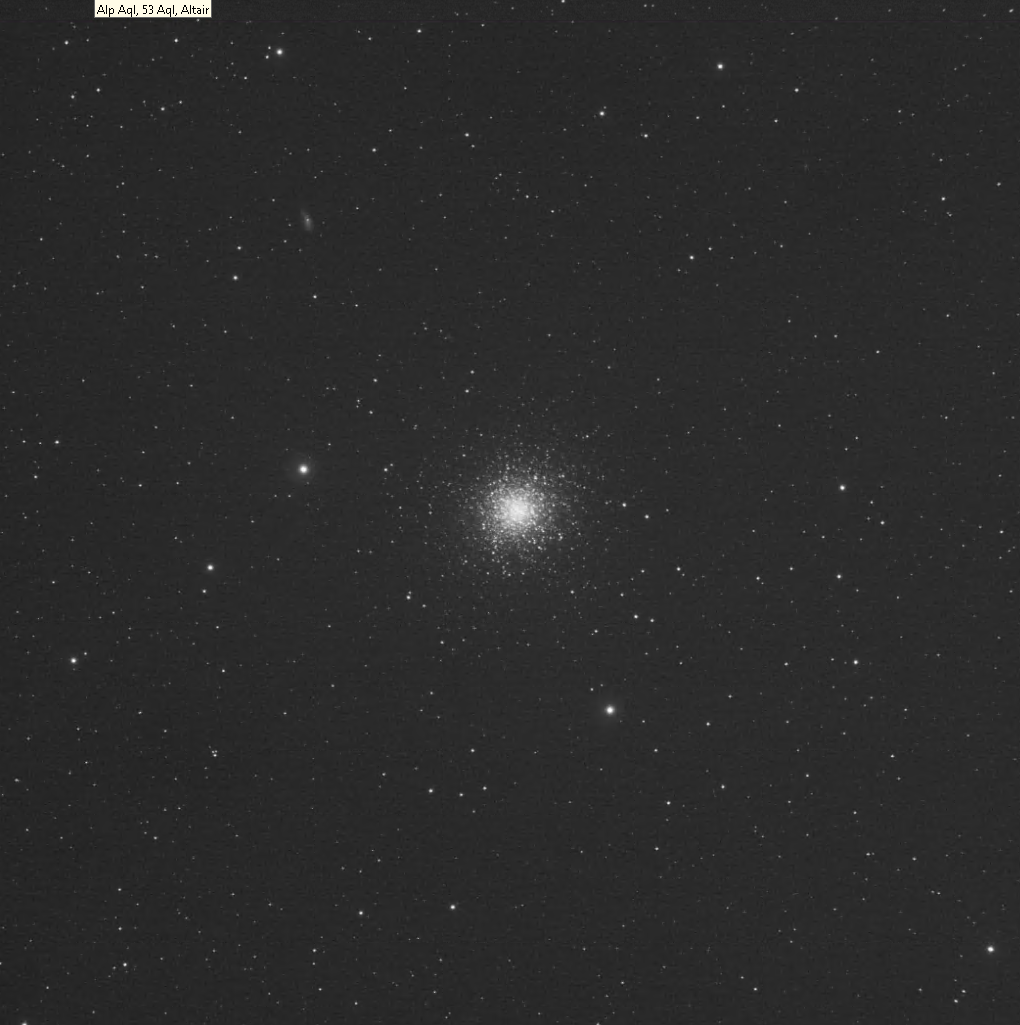
Surprisingly, I’ve not done an EAA observation of M13 using the TMB before. NGC6205 sits in a loose star field. The brightest stars in the FOV are HD150998 6.9 mag to the East and HD15079 7.3 mag to the Southwest. 27 arc mins PA 36 degrees to the Northeast lies NGC6207 , and 11.9 mag Sc type spiral galaxy.
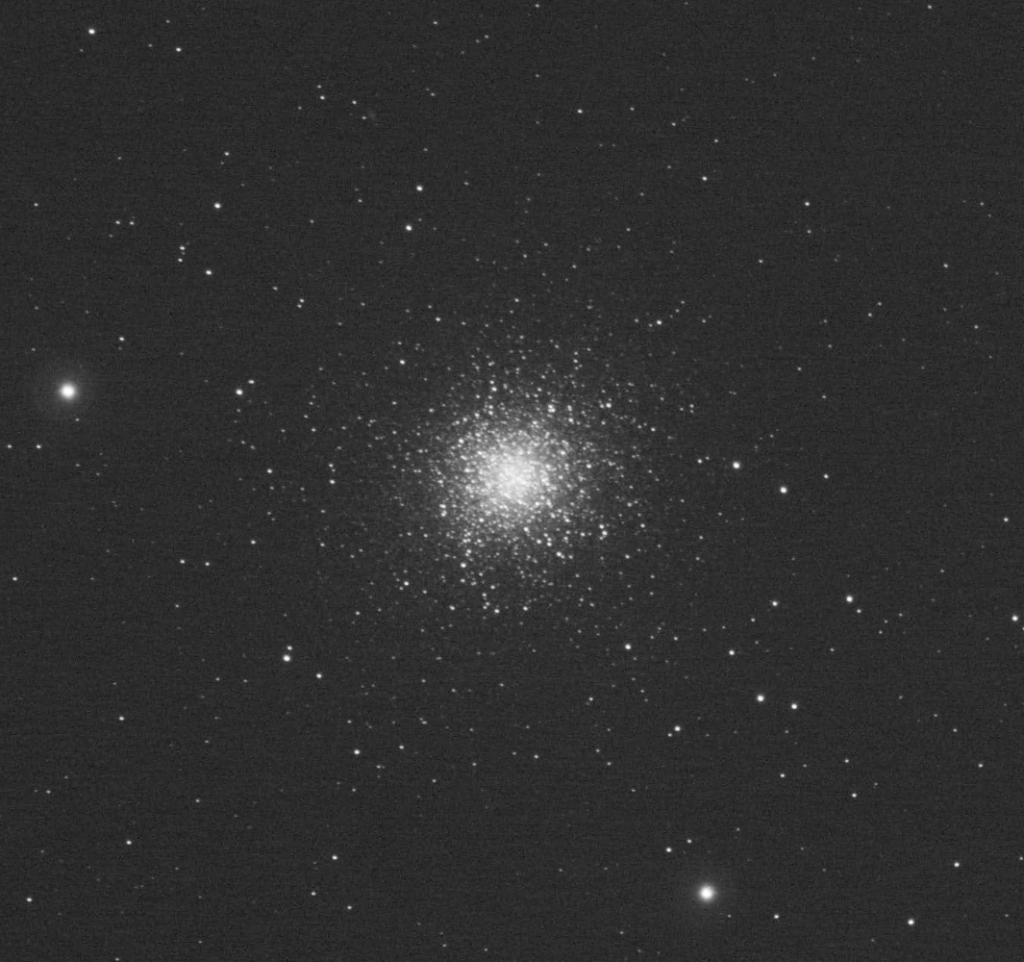
At 75% we can see lines of stars curving off from the brighter core. I don’t see the famous 3 blade propeller, but there is a line of stars just off the brighter core to the East that run North/South that displays propeller like qualities.
Total Integration Time: 510 sec