Session Data
- Date: 12/08/2026
- Time: 16:46 – 19:39 UT
- Seeing: I. Excellent
- Transparency: III. Clear with slight haze
- Temp: 23 C,
- Air Pressure: 1023mb
- Humidity: 68%
- Dew Point: 18 C
- Wind Speed: 16 mph
Scope: TMB 80 f/6 Camera: Player One Aries M Pro , SBIG G filter. No Darks or Flats taken
All Images are North up and East to the Left
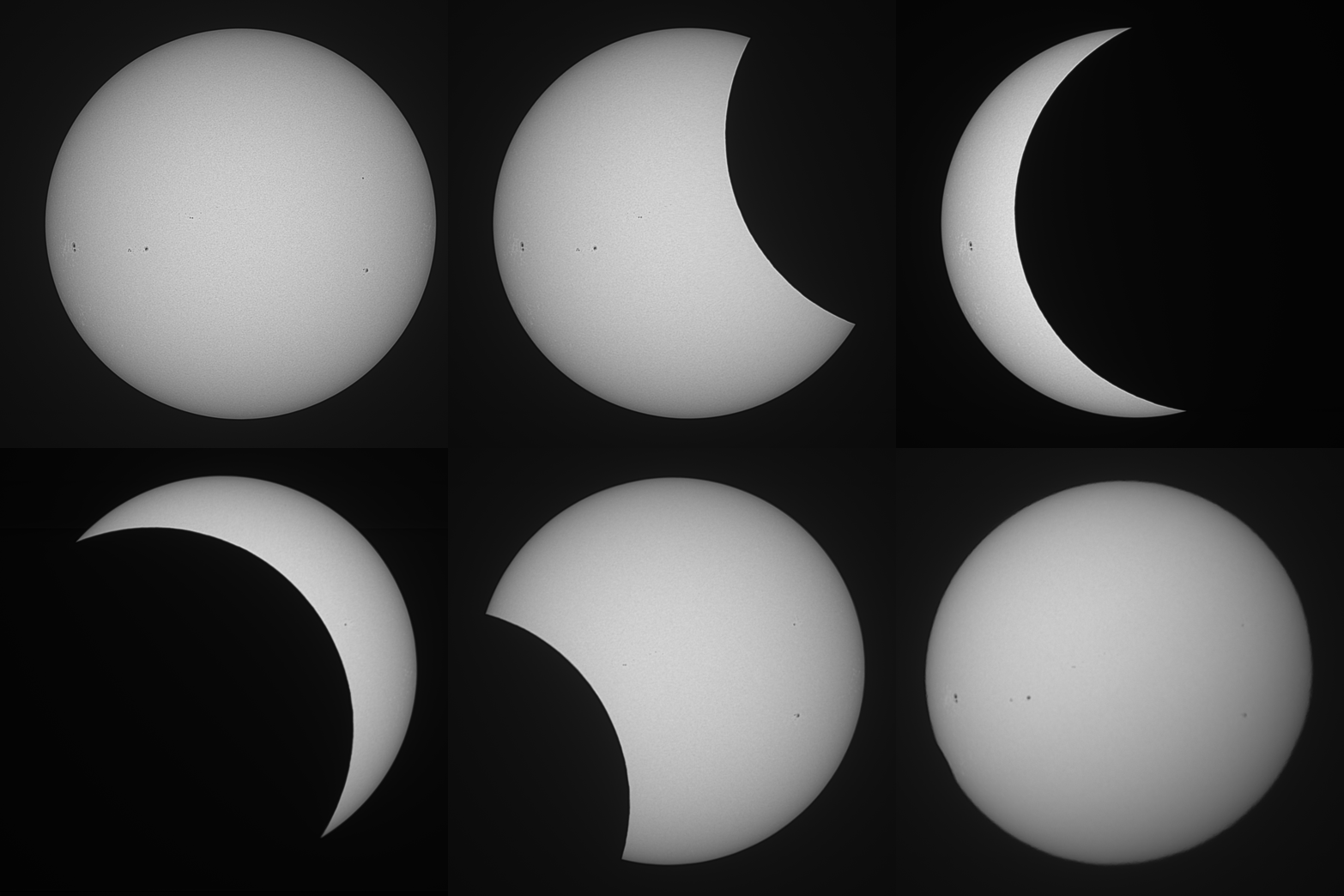
Having had a partial eclipse back in March of last year, I was not hopeful that we would get lucky for another one – especially as the next one of a similar obscuration won’t be until 2059, when I will be long dead. The weather did play ball and at the observatory I was able to record the whole thing.
I decided that i would capture an image every 5 minutes and combine them all into an animation that you see above. Five minute gaps would allow me enough time to allow me time to observe this event visually in between captures. I was happy with the sequence, but from an animation point of view every 1 or 2 minutes would have given a smoother animation.
As with all my other Solar observations, I used Sharpcap’s Planetary Stacking feature. I decided that a stack of 30 frames would give a good image quality, but not so long that I didn’t have enough time to keep an eye of camera exposure so that all the frames in the stack were evenly exposed throughout the sequence.
I don’t know why, but at the moment of 5% totality, the mount lost its tracking and I wasn’t able to get the moment of maximum obscuration. I has to quickly recenter the target, but this shifted slightly, so when processing the stack, I had to use Affinity to align all the images in the stack so the solar disk didn’t move around.