Session Data
- Date: 12/12/2025
- Time: 18:52 – 20:16 UT
- Seeing: II. Good – Slight
- Transparency: II. Clear with some cloud
- Temp: 7 C,
- Air Pressure: 1026mb
- Humidity: 90%
- Dew Point: 6 C
- Wind Speed: 3 mph
- Average SQM: 21.75magn/arcsec^2
Scope: Altair 150mm RC f/6 Camera: ZWO ASI 183MM. No darks or flats.
This session was more to test my rarely used Altair 150mm RC and to do a comparison with it’s bigger 250mm brother. I did spend a lot of time tweaking the collimation, but as there is no adjuster plate between the scope and the focuser, you have to hope the optical axis of the focuser aligns with the primary mirror – which in my case, they don’t. You can see this in the stars. I’m not overly fussed at this stage, but will have to address this at some point in the future.
HCG99
Located 1.8 degrees, PA 248 degrees of Alpha And in Andromeda.
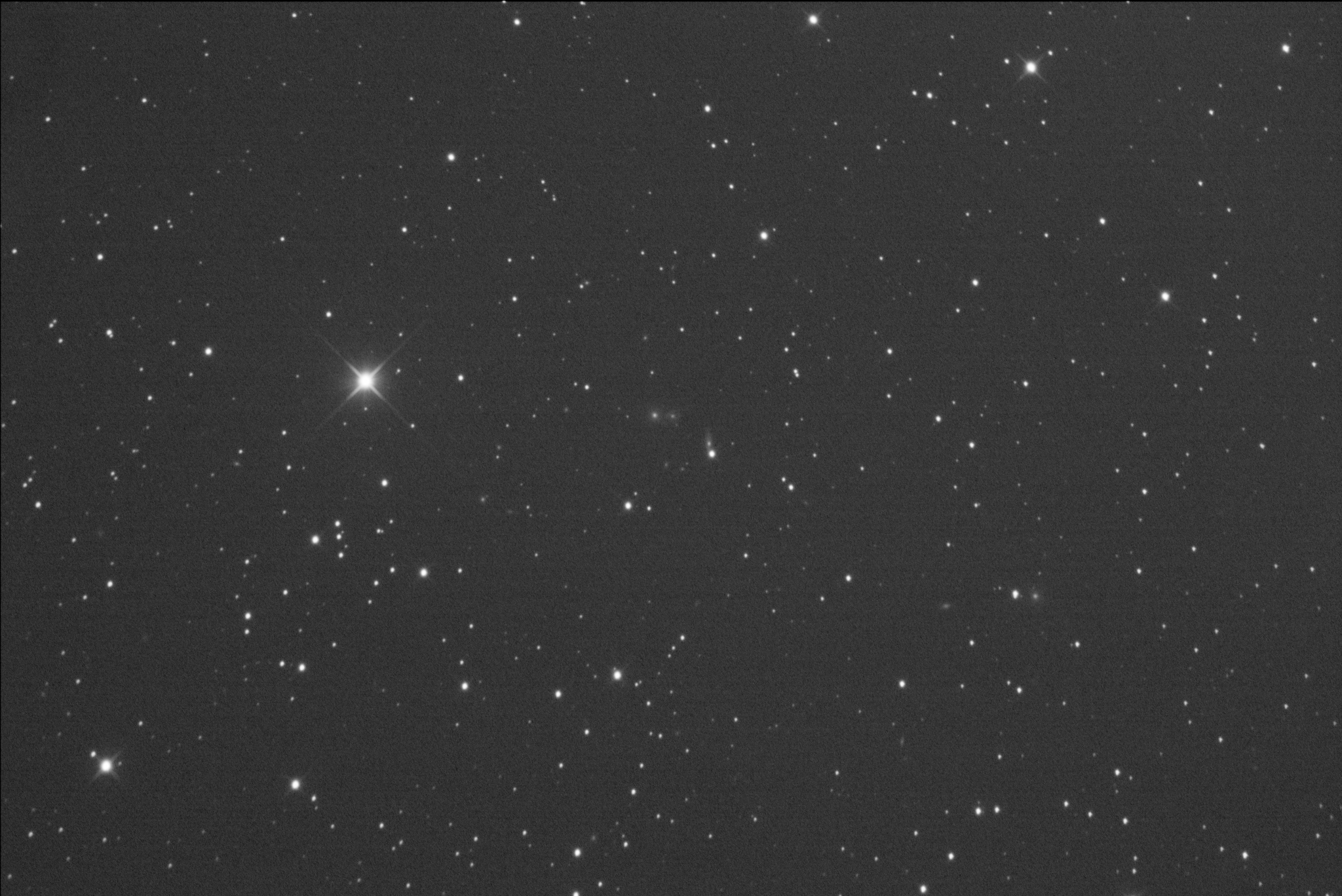
HCG99 contain 5 component galaxies. Working clockwise, according to Hickson, PCG63 14.6 mag and PGC58 15.7 mag are interacting, but here in this observation, there looks to be clear space between them. SW of these is PCG54 14.8 mag and to the SE of this are the last two, which are barely visible. PCG57 17.7 mag and PCG60 17.3 mag. These last two are so faint that they could be mistaken for stars of a similar magnitude.
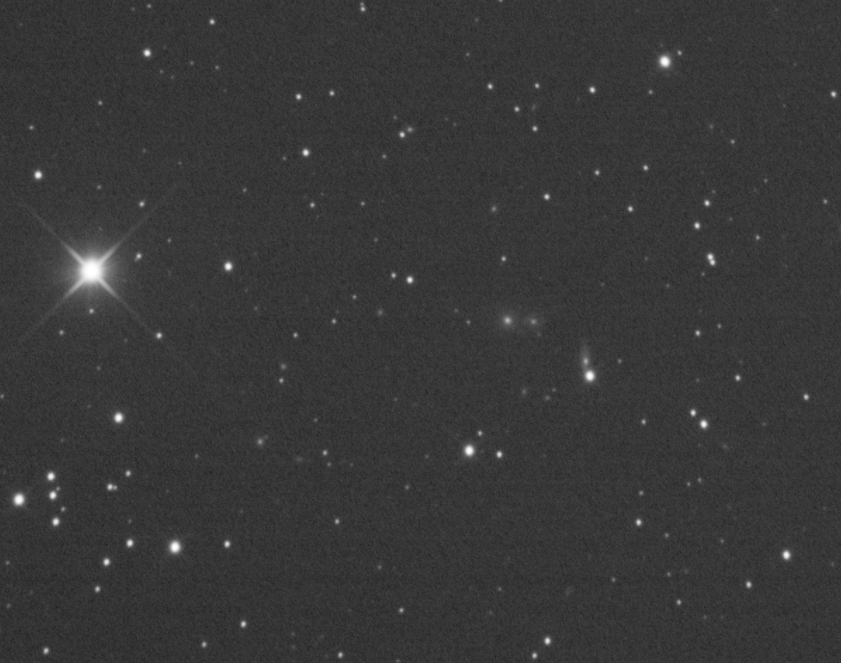
Total Integration Time: 315 sec
HCG1
Located 5.1 degrees, PA 129 degrees of Alpha And in Andromeda.
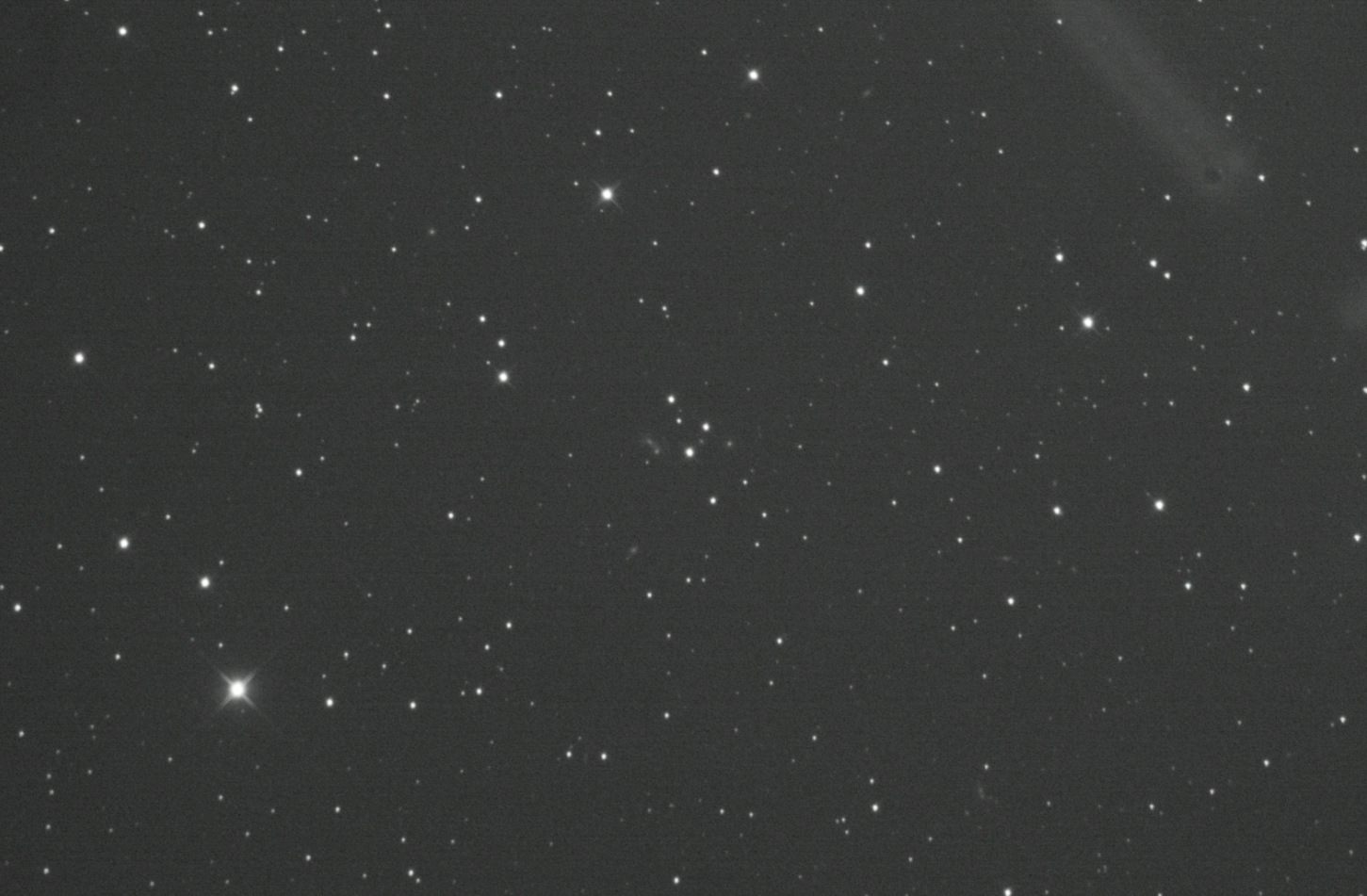
Consisting of four galaxies. From East to West we have PGC1627 14.9 mag, PGC1625 15.6 mag, PGC1618 17.0 mag and PGC1614 15.9 mag.
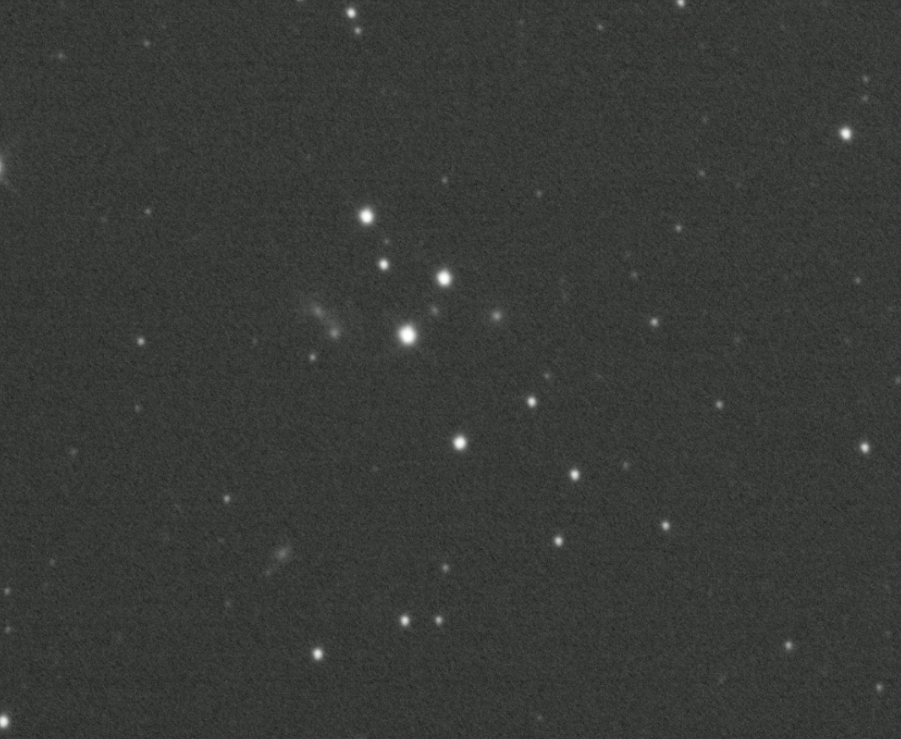
PGC1627 and PCG1625 seem to merge. The former looks nearly edge on and I cannot make out any structure apart from the core on the latter. PGC1618 looks nearly edge on but PGC1614 looks to face on. The group is split into two with a line between two stars of 12.0 mag and 11.0 mag.
Total Integration Time: 360 sec
Comet C/2025 K1 ATLAS
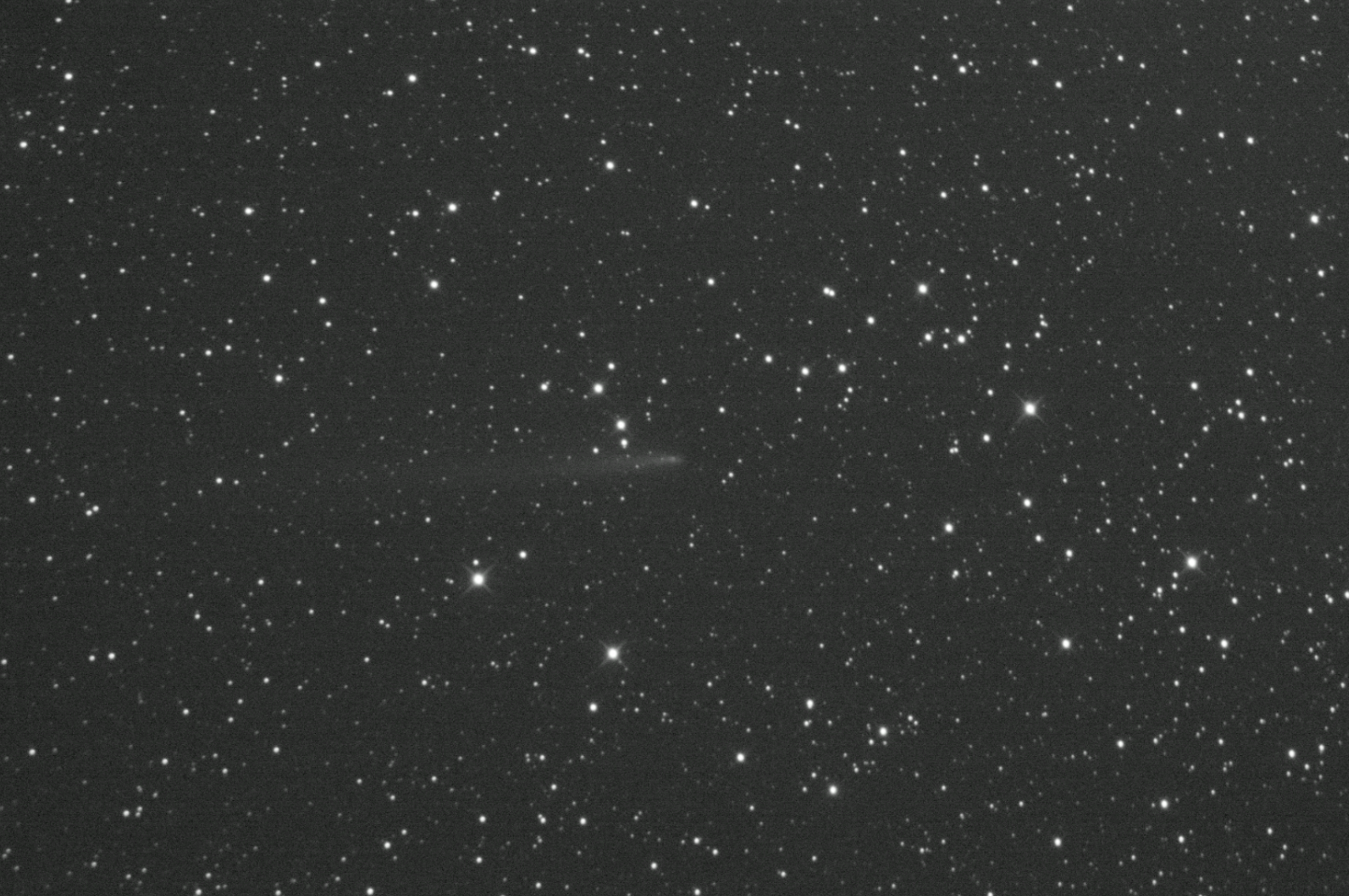
Having another go at C/2025 K1 ATLAS as a comparison to the one taken with the TMB 80 a couple of nights ago. In EAA terms, the tail is a little more prominent in the larger scope and extends to about 16 arc min as opposed to 9 arc min in the TMB. I’m still unable to make out any of the fragmentary components from the image.
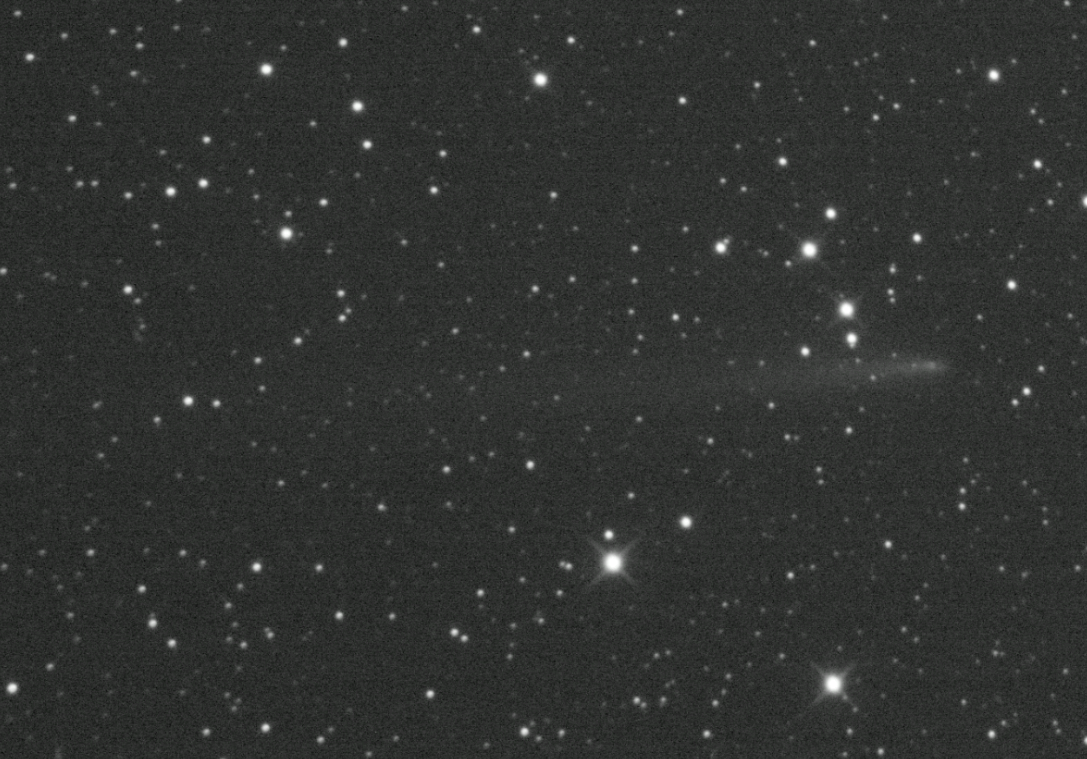
Total Integration Time: 150 sec
HCG8
Located 10.7 degrees, PA 118 degrees of Alpha And in Andromeda.
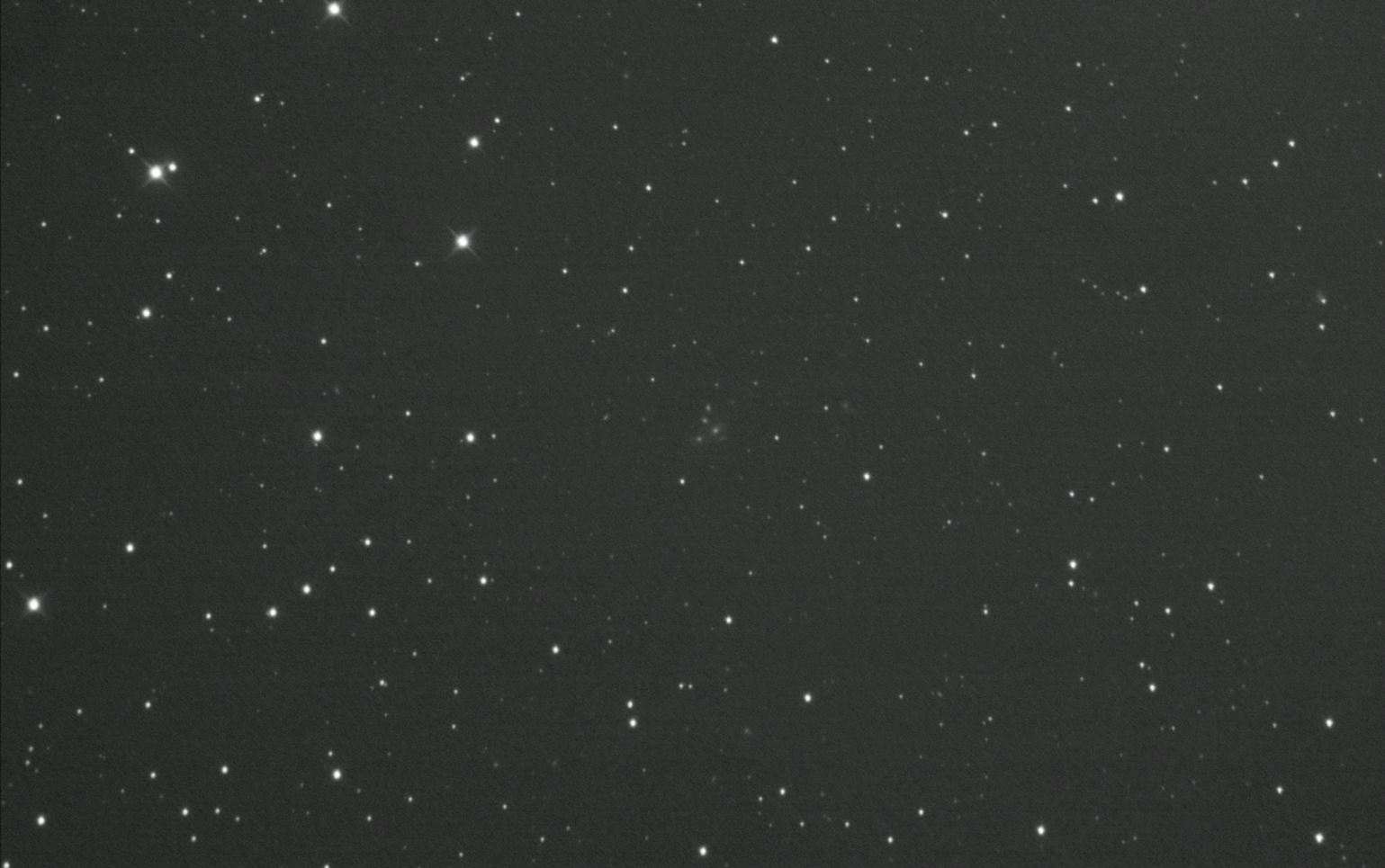
HCG8 consists of four galaxies. Starting North and going South we have PGC288 16.2 mag, PGC2890 16.1 mag, PGC2886 15.1 mag and PGC2892 16.2 mag. All four show spiral halos with a degree of orientation.
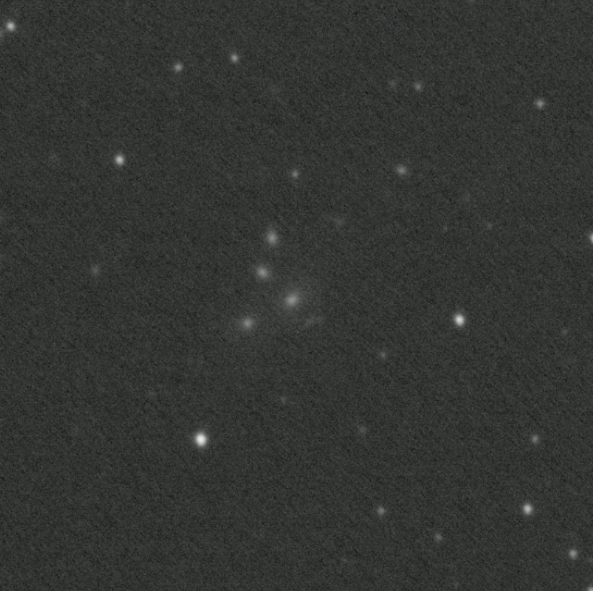
Total Integration Time: 480 sec
M110, NGC205
Located 4.5 degrees, PA 316 degrees of 37 And in Andromeda.
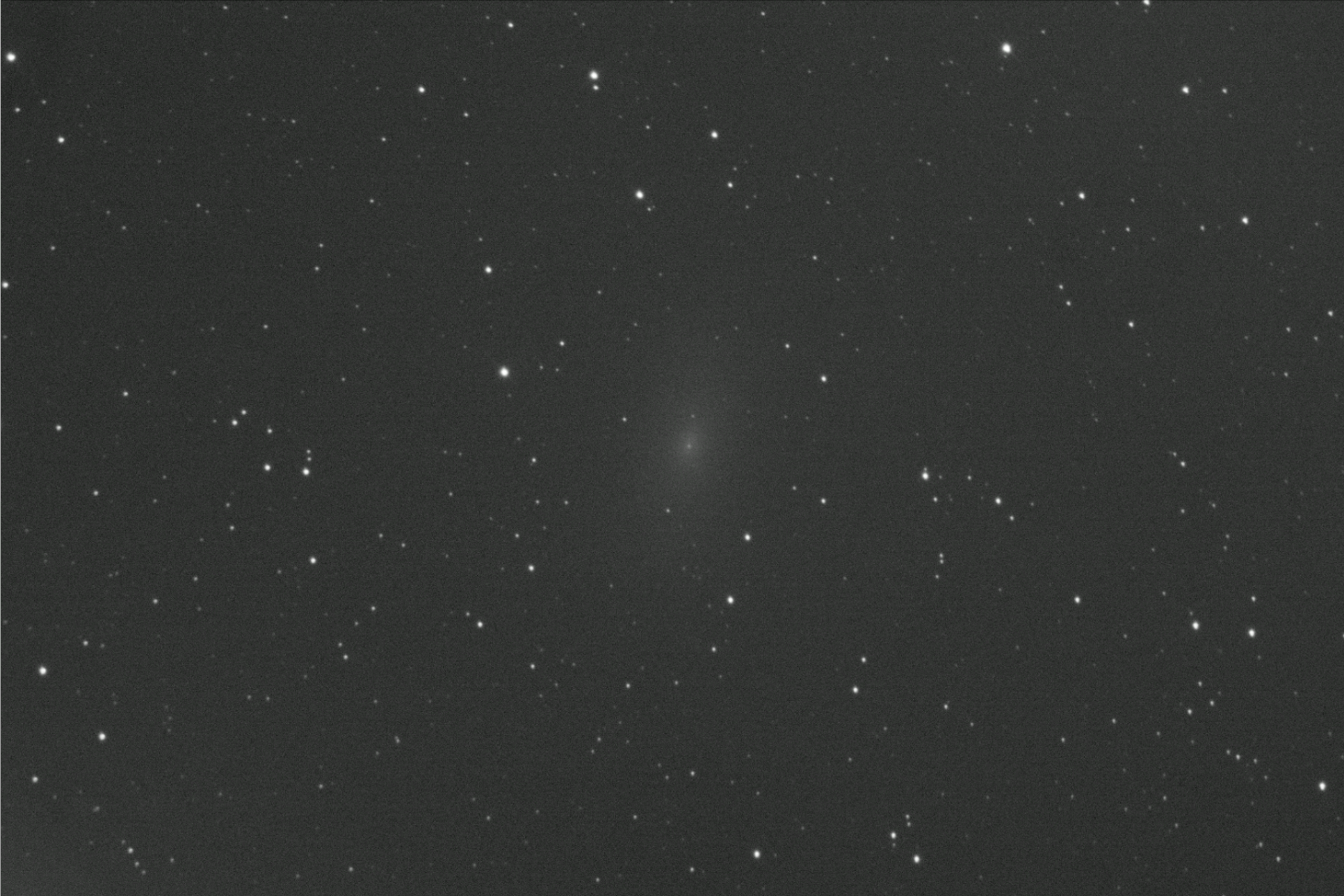
I’m completely underwhelmed by this. A pinpoint core that bleeds out to about 2.3 arc min before disappearing into the background.
Total Integration Time: 300 sec
M103, NGC581
Located 1.0 degrees, PA 65 degrees of Delta Cas in Cassiopeia.
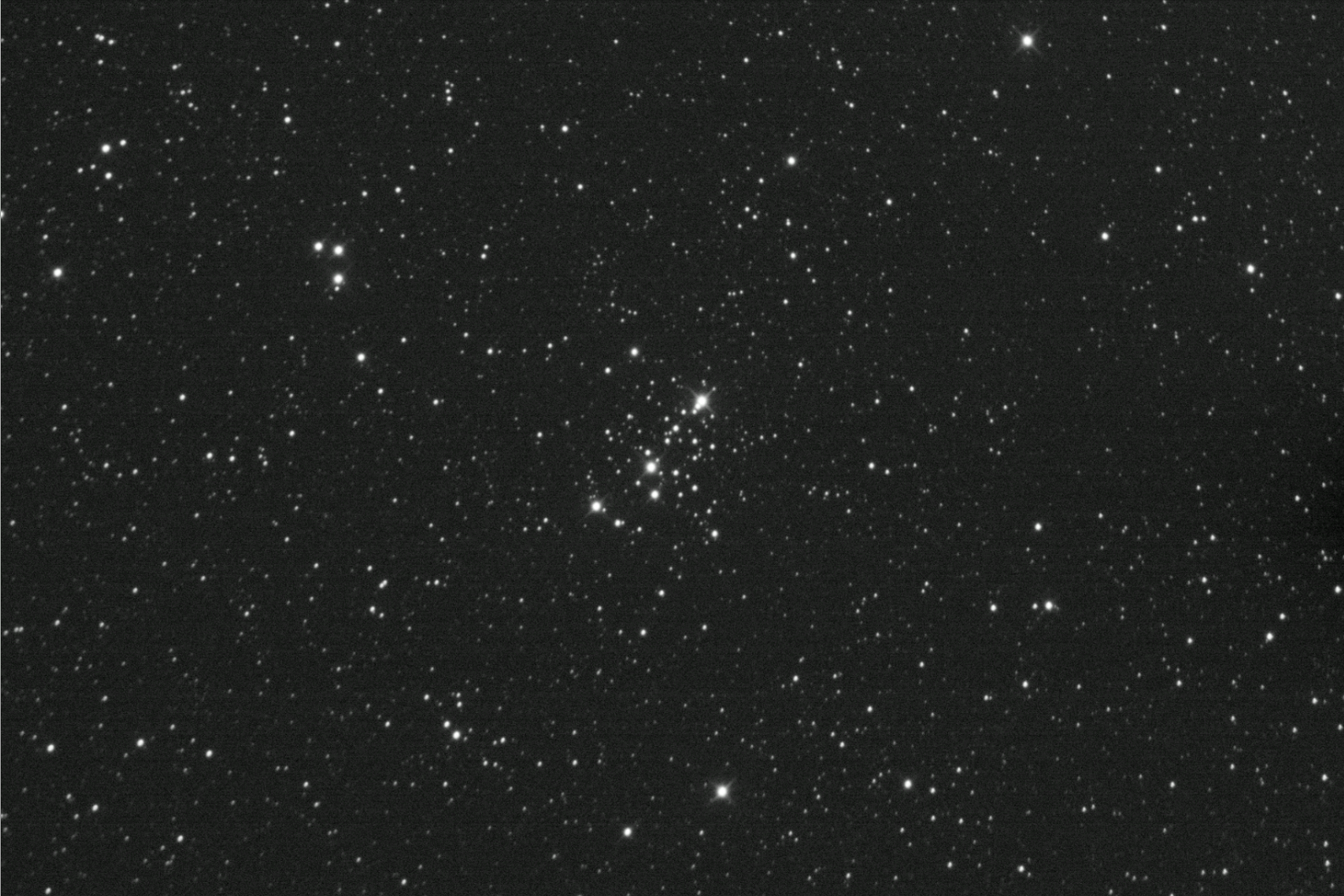
We have three bright stars forming a line with a PA of 315 degrees covering a circle of about 7 arc min. Right angles to this facing Southeast you see a line of a number of stars of varying brightness 10.0 – 11.0 mag. The rest of the cluster contains 13.0 – 14.0 mag stars of which there about 18 or so.
Total Integration Time: 120 sec
M15, NGC7078
Located 4.1 degrees, PA 303 degrees of Epsilon Peg in Pegasus.
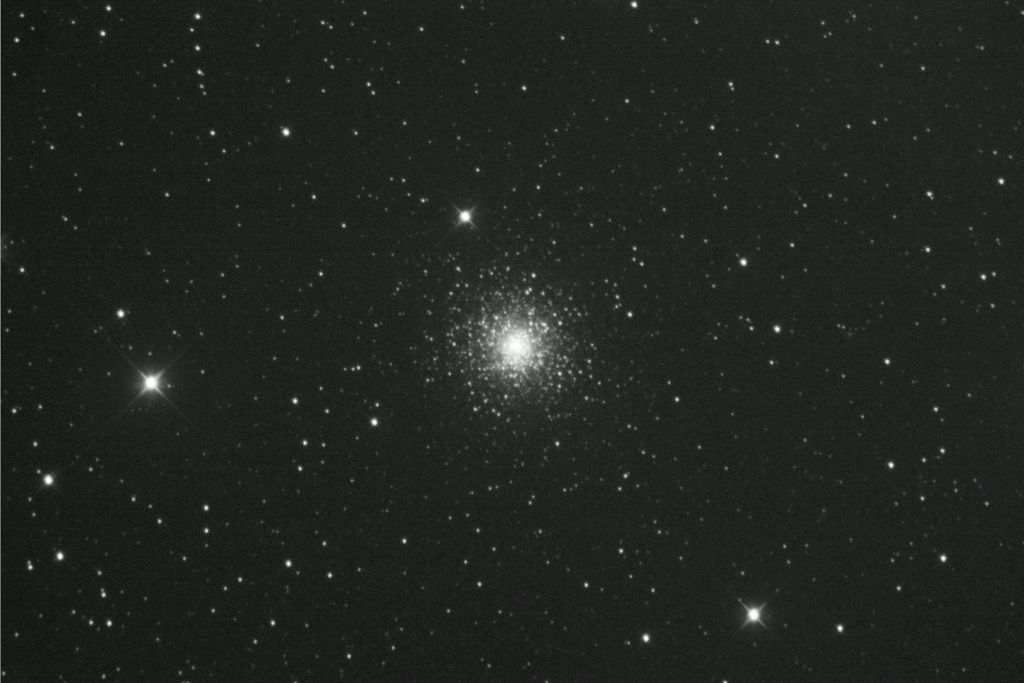
Even a 2 minutes, the core is starting to burn out and this extends about 1.5 arc mins. From there you can start to make out individual stars and these extend out to a radius of about 3.3 arc mins which is see as being the outer edge of this globular.
Total Integration Time: 120 sec